
Case Details
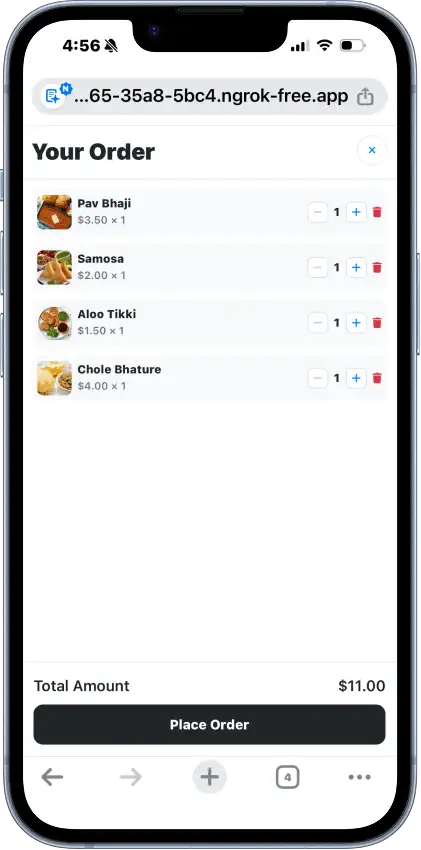
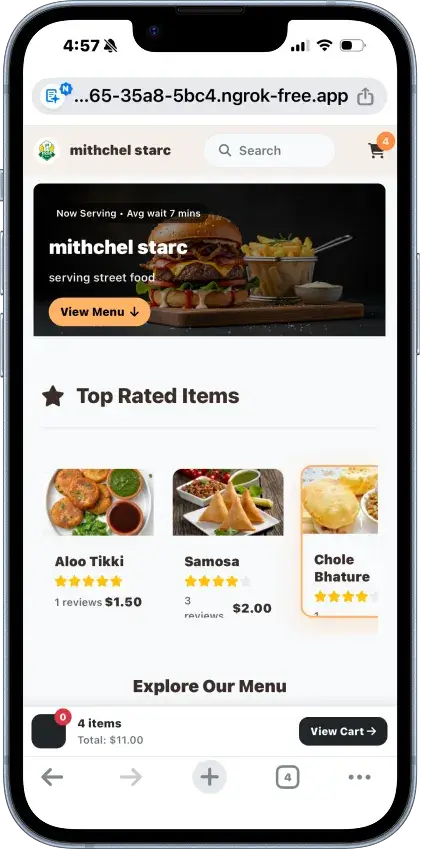
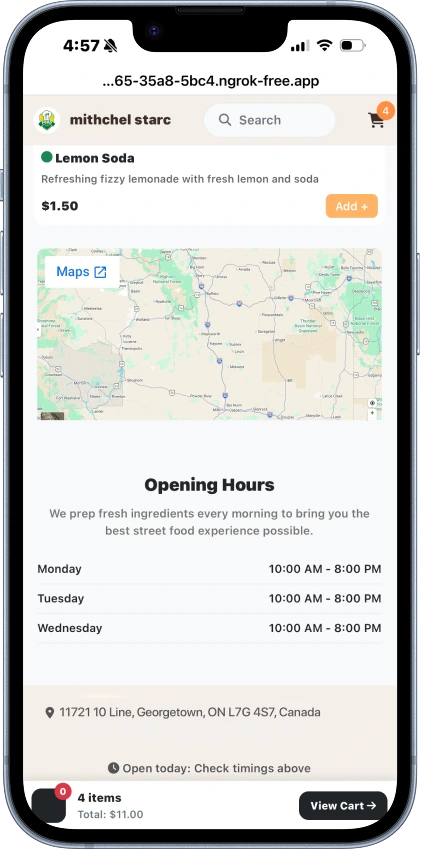
Customer End: QR Code → Mobile Browser Menu
Download Case Details
Download a detailed report on this case
Let’s Work Together for Development
Call us directly, submit a sample or email us!
Address Business
Call Us
+91 91159-91859
Working Time
Holiday : Closed
About the Client
The Food Truck Management System is a multi-vendor SaaS platform built in-house by Stealth Technocrats Private Limited. It was designed to solve a real operational gap in the food truck and small restaurant segment: the lack of a dedicated, affordable, and easy-to-use digital platform that lets food vendors manage their menu, receive orders, and present their brand — all without any technical expertise.
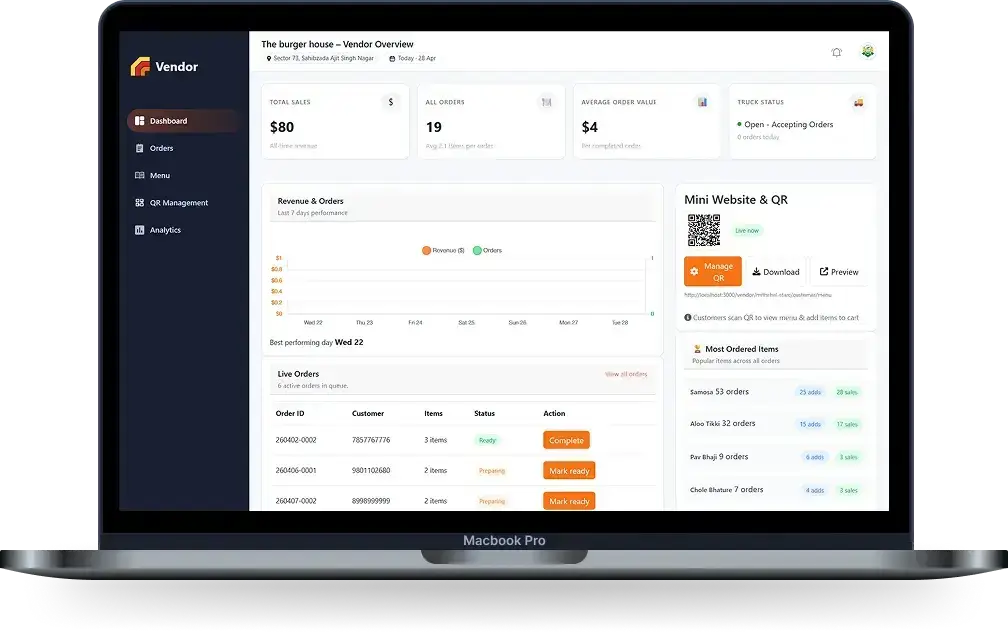
The platform operates on a three-tier model: a super admin who manages the overall vendor ecosystem, individual food truck vendors who each get their own branded digital storefront and order management workspace, and end customers who interact with the menu simply by scanning a QR code on their phone.
Platform Roles
| Super Admin | Onboards and manages all food truck vendors on the platform. Reviews and approves vendor registrations, manages credentials, monitors active storefronts, and maintains overall platform health. Has full visibility into all vendors and their activity. |
| Food Vendor | Each vendor gets their own isolated dashboard and mini website (storefront). They manage their menu independently — adding, editing, and deleting items — customise their storefront theme to match their brand, and receive and manage incoming customer orders via a Kanban board. |
| Customer (End User) | Customers scan a QR code placed at the food truck (table, counter, or signage). This opens the vendor's branded menu directly in their mobile browser — no app download required. They browse items and place their order from the menu page. |
The Problem
| No Unified Platform for Food Trucks | Food truck vendors had no dedicated digital system to manage their menu, receive orders, and track fulfilment. Most relied on WhatsApp orders, handwritten notes, or generic POS systems not designed for the food truck format. |
| Menu Updates Were Slow & Manual | Updating a menu — adding seasonal items, marking items as unavailable, changing prices — required either reprinting physical menus or editing a static website, both time-consuming and prone to inconsistency. |
| No Real-Time Order Management | As orders came in from multiple customers simultaneously, tracking which order was being prepared, which was ready, and which was delivered was chaotic with no visual workflow. Mistakes and delays were common. |
| No Customer-Facing Digital Menu | Customers had no convenient way to browse a menu, see item details, or place orders without interacting with staff — slowing down the ordering process, especially during peak hours. |
| Zero Vendor Branding Control | Each food truck has its own identity, colours, and aesthetic. A generic, one-size-fits-all menu page failed to reflect vendor branding — making all storefronts look identical and diminishing brand recall. |
| Manual Admin Onboarding | When onboarding new food truck vendors to the platform, there was no structured admin workflow — no vendor approval process, no credential management, and no centralised oversight of active vendors. |
The Solution
| EJS Templates | Server-side rendered views for vendor dashboard, storefront menu pages, and admin panel — fast initial load, SEO-friendly | |
| Node.js Backend | Event-driven server handling vendor management, menu CRUD, order processing, real-time updates, and QR generation | |
| MongoDB | Flexible document model stores vendor profiles, dynamic menu structures, order records, and theme configurations per vendor | |
| QR Code → Browser | Each vendor gets a unique QR code linking to their branded storefront. Customers scan and order from mobile browser — no app install | |
| Kanban Order Board | Real-time visual board with columns (New → Preparing → Ready → Delivered) giving vendors a clear, drag-and-drop order workflow | |
| Theme Engine | Per-vendor theme configuration — colours, fonts, banner images — applied dynamically to the storefront at render time |
Features Delivered
| Admin Vendor Onboarding | A super admin panel allows the platform operator to onboard new food truck vendors — reviewing registrations, approving accounts, assigning credentials, and managing the full roster of active vendors from a centralised dashboard. |
| Vendor Mini Website (Storefront) | Each vendor receives their own dedicated storefront URL — a fully functional mini website displaying their menu. The storefront is isolated per vendor, meaning each vendor's menu, theme, and branding are completely independent of other vendors on the platform. |
| Dynamic Menu Management | Vendors manage their menu entirely from their dashboard — adding new items with name, description, price, image, and category; editing existing items in real time; marking items as unavailable without deleting them; and permanently deleting items. All changes reflect instantly on the live storefront. |
| QR Code Ordering (Customer End) | Each vendor's storefront is linked to a unique QR code. Customers scan the QR code using any smartphone camera — no app required — and are taken directly to that vendor's branded menu page in their mobile browser, where they can browse and place orders. |
| Kanban Order Management Board | Incoming customer orders appear instantly on a Kanban-style visual board in the vendor's dashboard. Orders move through defined stages — New Order, Preparing, Ready for Pickup, Delivered — giving vendors a clear, drag-and-drop workflow to manage multiple simultaneous orders without confusion. |
| Per-Vendor Theme Customisation | Vendors can style their storefront to match their food truck's brand identity. The theme engine supports colour palette selection, font preferences, banner/header image uploads, and layout choices — all applied dynamically to the storefront at render time so every vendor's mini website looks unique. |
The Results
What the platform replaced and what it enabled:
r involvement in supporting the Company merger extended over a comprehensive three-year period, encompassing activities ranging from pre-merger due diligence to post-closing strategy.